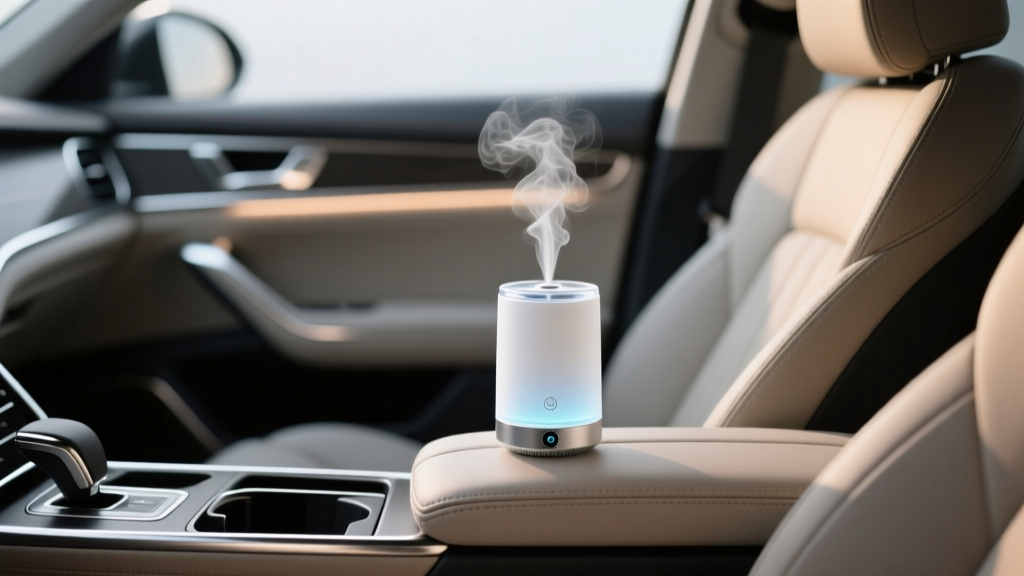
Premium Air Freshener Systems: Car Interior Guide (2026)
Most car owners think about air fresheners only when the cabin starts smelling ?off.? But once you?ve experienced a premium air freshener system?one that actually complements your interior rather than masking problems?it?s hard to go back. The right solution can make your daily drive feel cleaner, calmer, and more upscale, especially if you spend a lot of time commuting, road-tripping, or driving rideshare.
Part 1 covered the basics of scent types and the differences between low-cost fresheners and premium approaches. This Part 2 goes deeper into the solutions that serious enthusiasts and detail-minded owners gravitate toward: vent-clip systems that don?t leave residue, atomizing diffusers that behave more like fine fragrance, discreet OEM-style upgrades, and odor-control methods that solve the problem rather than perfume over it.
If you care about your car?s interior?leather, Alcantara, soft-touch plastics, headliners, and all?premium cabin fragrance isn?t just about smelling good. It?s about keeping materials in better condition, avoiding stains and film, and choosing a setup that fits how you actually drive.
What Makes an Air Freshener System ?Premium? (Beyond the Price)
Premium car fragrance systems typically deliver three things: controlled output, cleaner installation, and higher-quality scent profiles. Instead of blasting a strong smell for two days and fading into nothing, a premium system aims for consistency and subtlety.
Key traits to look for
- Adjustable intensity: Level control (manual or app-based) so you don?t overwhelm passengers.
- Even diffusion: Fragrance disperses consistently, not in hot/cold bursts.
- Low-residue design: Minimal risk of oily film on dash screens and trim.
- Refill availability: Easy to source refills with stable quality from batch to batch.
- Material safety: Less chance of staining leather, headliners, or matte plastics.
Real-world example
If you?ve ever used a cheap liquid bottle freshener that leaked, you know the damage: shiny spots on plastic, softened coatings, and a permanent perfume smell. Premium solutions prioritize containment and measured release so your interior doesn?t pay the price for a nicer scent.
Premium System Types (Pros, Cons, and Best Use Cases)
1) Vent-clip diffusers (upgraded, controlled, and tidy)
Vent-mounted systems remain popular because they use your HVAC airflow for distribution. Premium versions use better housings, more stable refill media, and adjustable shutters to regulate scent output.
- Best for: Daily drivers, commuters, anyone who wants a simple setup.
- Pros: No power needed, easy install, consistent spread with HVAC running.
- Cons: Can be stronger when heat is on; some designs may mark delicate vent fins if forced.
2) Atomizing diffusers (fine mist, boutique fragrance feel)
These units disperse scent in a very fine mist, usually from an oil/fragrance cartridge, often powered by USB or an internal battery. Premium models focus on precise timing, intensity settings, and quieter operation.
- Best for: Enthusiasts who want ?designer fragrance? vibes and control.
- Pros: Highly adjustable, strong performance in larger cabins, modern aesthetics.
- Cons: Requires charging/power; low-quality oils can leave residue if overused.
3) Under-seat or hidden cartridge systems (OEM-style discreet)
Some premium solutions are meant to be invisible?mounted under a seat or in a console area?releasing a gentle scent without drawing attention to a clip or device.
- Best for: Luxury interiors, minimalists, leased vehicles (if non-permanent).
- Pros: Out of sight, more ?factory? feel, less distraction.
- Cons: Can be harder to adjust quickly; may take longer to fill the cabin evenly.
4) Odor-neutralizing systems (solve the source, not just the smell)
Premium air care isn?t always fragrance-forward. Odor-neutralizing gels, enzyme-based treatments, and cabin filter upgrades help remove the root cause: bacteria in HVAC ducts, spilled drinks in carpet padding, or lingering smoke.
- Best for: Used-car refresh, pet vehicles, smoke/food odor issues.
- Pros: Genuine improvement; pairs well with any fragrance system afterward.
- Cons: Takes more effort; sometimes requires repeating steps.
How to Choose the Right Premium Solution for Your Car
Pick based on your cabin size, interior materials, and how sensitive you and your passengers are to fragrance. A compact coupe needs less output than a three-row SUV, and a family vehicle might benefit from odor neutralization first.
Use this quick decision guide
- You want simple + clean: Premium vent-clip diffuser with adjustable shutter.
- You want maximum control: Atomizing diffuser with intensity/timer settings.
- You hate visible accessories: Under-seat/hidden cartridge style.
- Your car smells ?stale? even after cleaning: Odor-neutralizing + cabin filter upgrade, then add a light fragrance.
Scent profile tips (what actually works in cars)
- Hot weather: Citrus, aquatic, light woods (they feel cleaner and less cloying).
- Cold weather: Amber, vanilla, leather, warm woods (but keep intensity low).
- Luxury vibe: Neroli, sandalwood, cedar, ?clean musk? profiles.
- Avoid for small cabins: Heavy gourmand (very sweet) scents at high intensity.
Step-by-Step: Installing and Tuning a Premium Vent-Clip System
What you?ll need
- Premium vent-clip diffuser (adjustable if possible)
- Refill cartridge/pad
- Microfiber towel (to protect trim and wipe hands)
Steps
- Choose the right vent: Pick a center vent for even distribution, or a passenger-side vent if you prefer scent to be less direct for the driver.
- Clean the vent area: Lightly wipe the vent slats and surrounding trim to remove dust and interior dressing residue.
- Install the refill correctly: Seat the cartridge/pad fully so it doesn?t rattle or fall out over bumps.
- Attach gently: Slide the clip on without forcing. If the vent fin flexes too much, choose another vent or a different mounting style.
- Start at low intensity: Open the shutter slightly or select the lowest setting.
- Tune with HVAC: Run fan speed 2?3 for a few minutes. Adjust intensity gradually?give it time to stabilize before turning it up.
- Check for residue after 48 hours: Wipe nearby trim. If you see an oily film, reduce intensity or switch scent/refill type.
Step-by-Step: Using an Atomizing Diffuser Without Creating Film on Your Interior
Atomizing diffusers can be fantastic, but they?re also the easiest to misuse. The goal is ?background fragrance,? not a fog machine.
Steps
- Place it strategically: Put it in a cup holder or door pocket where it won?t tip. Avoid placing it directly under the infotainment screen vents.
- Use quality refills: Stick to reputable cartridges/oils made for car diffusion (not random essential oil blends that may separate or stain).
- Set a conservative schedule: Start with short bursts (example: 2?5 seconds every 5?10 minutes). Increase slowly only if needed.
- Don?t blast with heat: High heat can amplify fragrance intensity. If you use heat, lower the diffuser output.
- Monitor sensitive surfaces: Gloss piano black trim, gauge clusters, and screens show film fastest?wipe weekly with a clean microfiber.
- Reassess after a week: If passengers mention ?strong perfume,? cut output in half. Premium fragrance should feel effortless.
Product Recommendations and Comparisons (What to Look For)
Rather than pushing one brand for every driver, use these categories and shopping criteria. Premium air freshener systems vary a lot in build quality and refill consistency.
Premium vent-clip systems: best for most owners
- Look for: adjustable shutter, sturdy clip, refill media that doesn?t drip, subtle scent options.
- Great for: daily commuting, shared family cars, leased vehicles.
- Skip if: your vents are unusually fragile or shaped in a way that won?t hold clips well.
Atomizing diffusers: best for control and larger cabins
- Look for: multiple intensity levels, timer modes, stable cartridge design, quiet operation, USB-C charging.
- Great for: SUVs, rideshare drivers, enthusiasts who like consistent ?signature scent.?
- Skip if: you hate charging devices or you?re very sensitive to fragrance.
Odor-neutralizing + cabin filter: best foundation upgrade
- Look for: enzyme odor treatments for organic smells, HVAC foam cleaners for evaporator funk, and a high-quality cabin air filter (activated carbon is popular for odor reduction).
- Great for: used cars, smokers? cars, pet owners, mildew/HVAC odors.
- Skip if: you?re only trying to add a light scent to a clean cabin (though a carbon cabin filter is still a smart upgrade).
Common Mistakes to Avoid (These Ruin the Premium Experience)
- Using fragrance to hide a real odor: If your HVAC smells musty when the A/C starts, address that first (cabin filter + evaporator cleaning).
- Cranking intensity immediately: Nose-blindness happens fast. Start low, adjust slowly.
- Placing liquid-based products on porous surfaces: Carpets, Alcantara, and headliners can stain or hold scent permanently.
- Overheating a vent-clip refill: Heat can turn ?pleasant? into ?headache? quickly and may increase residue risk.
- Ignoring interior cleaning: Food crumbs, spilled coffee under the seat, and dirty floor mats will overpower any premium fragrance system.
- Mixing too many scents: A vent clip plus a hanging card plus a console gel usually smells chaotic. One system, one profile.
Practical Tips for a Long-Lasting, High-End Cabin Scent
- Build a clean baseline: Vacuum, wipe touchpoints, clean mats, then add fragrance. Premium scent works best on a clean canvas.
- Keep the cabin filter fresh: If you drive in heavy traffic or dusty areas, replace it more often than the minimum schedule.
- Use recirculation wisely: Recirc can intensify scent quickly. If it gets too strong, switch to fresh air for a few minutes.
- Match intensity to trip length: For short drives, use a brief burst. For long drives, lower intensity and let it stay steady.
- Store refills properly: Keep unopened refills away from heat and direct sunlight to prevent evaporation and scent shift.
FAQ: Premium Car Air Freshener Systems
Are premium air freshener systems safe for leather and Alcantara?
They can be, as long as you avoid direct contact with liquid fragrance and keep output moderate. The biggest risks come from leaks, overspray, or placing fragrance on porous materials. Use contained cartridges, mount securely, and wipe nearby surfaces occasionally.
Why does my car smell musty when the A/C turns on even with a freshener?
That?s usually bacteria/mold on the evaporator or moisture trapped in the HVAC box. A premium fragrance won?t fix it. Start with a cabin air filter replacement (activated carbon helps), then consider an HVAC evaporator cleaner designed for automotive systems.
Do activated carbon cabin filters really help with odor?
Yes. They won?t eliminate every smell instantly, but they can noticeably reduce outside exhaust odors and help keep the cabin from getting stale. They?re a smart ?foundation? upgrade if you?re serious about cabin air quality.
How do I prevent oily film on my dashboard and screen?
Use lower intensity settings, avoid cheap or overly oily refills, and don?t aim a diffuser directly at screens. If you?re using an atomizing diffuser, reduce burst frequency and wipe sensitive glossy surfaces weekly with a clean, dry microfiber.
What?s the best scent intensity for passengers who are sensitive to fragrance?
Choose light, clean profiles (citrus, soft woods, fresh linen-style) and run the system at the lowest setting. A good test is whether the scent is noticeable only when entering the car, then fades into the background after a minute.
How often should I replace refills?
It depends on system type, heat exposure, and intensity. Vent-clip refills often last a few weeks; atomizing cartridges vary widely based on settings. If the scent becomes sharp, inconsistent, or fades unevenly, it?s usually time to replace the refill and wipe the device.
Conclusion: Your Next Steps for a Better-Smelling, Better-Kept Interior
If you want a premium cabin scent that feels like it belongs in the car?not like an afterthought?start by getting the basics right: clean the interior, eliminate any real odor sources, and upgrade your cabin air filter if it?s overdue. Then choose one premium fragrance system that matches your driving habits, mount it carefully, and keep intensity subtle.
Action plan:
- Reset the cabin: vacuum, wipe down surfaces, clean mats.
- Fix odors at the source: cabin filter + HVAC cleaning if needed.
- Pick your system: vent-clip for simplicity, atomizing diffuser for control, hidden cartridge for OEM-style discretion.
- Start low and tune slowly: avoid overpowering scent and residue.
For more no-nonsense interior care tips, product breakdowns, and upgrade guides, explore the latest articles on carinteriormix.com.